

By Mvemba Phezo Dizolele
Eastern Democratic Republic of Congo (DRC) has once again become a focal point where regional security dynamics intersect with global economic competition.
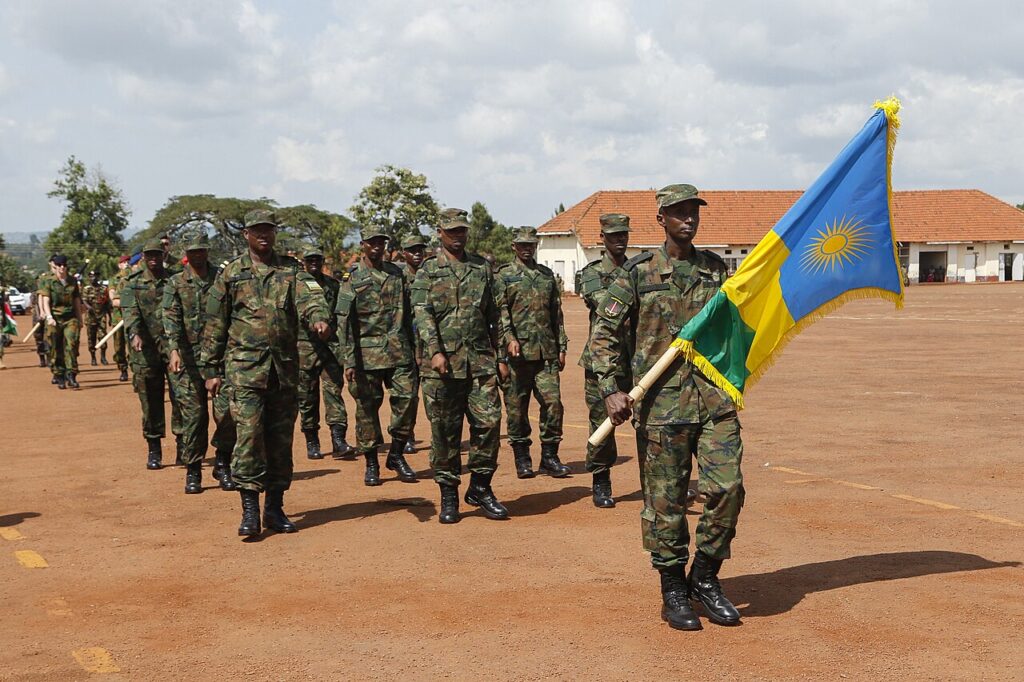
On March 2, 2026, the United States Treasury imposed sanctions on the Rwandan Defence Force (RDF) and four of its top generals, including the Chief of Defence Staff. This is the first time the United States has sanctioned the entire Rwandan military and its top leadership.
Many stakeholders had long advocated for sanctions, but their magnitude was unexpected. The security partnership between the RDF and the United States, driven by America’s regional interests, seemed solid. Rwandan officers were carefully spared the sanctions that Washington regularly imposed on Ugandan officers, even though both the RDF and the Uganda Peoples’ Defence Forces used the same methods, shared the same doctrines, and benefited from the same level of cooperation from Western powers.
However, the end of such partnerships is rarely sudden; it results from a series of events that gradually erode trust. In this instance, the trust-eroding process was evident long before the fall of Goma in January 2025. The bomb attacks on camps for displaced persons near Goma in May 2024 gave the United States its first opportunity to publicly express its exasperation with the Rwandan army. While their European Union allies avoided naming the culprit, the United States took a firm stance in “strongly” condemning “the attack today from Rwanda Defense Forces (RDF) and M23 positions.”
Following the Goma attack in January 2025, the U.S. imposed sanctions on retired General James Kabarebe, the principal security adviser to Rwandan President Paul Kagame, who formerly served as a minister of state for regional integration, minister of defense, and chief of defense staff. Those sanctions also extended to Lawrence Kanyuka Kingston, an M23 and Congo River Alliance senior member and spokesperson, and two of his companies registered in the United Kingdom and France.
Four days later, on March 6, as if to underscore the Trump Administration’s resolve, the U.S. Department of State announced visa restrictions for senior Rwandan officials for fueling instability in eastern DRC, continuing support to M23, and violating the Washington Accords.
The roots of the confrontation between Rwanda and the United States lie in eastern DRC. Long tolerated by Washington, Rwanda’s repeated destabilizing activities in this part of Congo have suddenly collided with a new phase of U.S. geopolitical engagement centered on access to critical minerals and regional stability. The sanctions signal that Washington is no longer willing to tolerate Rwanda’s military posture in eastern DRC, particularly its support for the M23 rebellion.
At stake is not only the future of the conflict in eastern DRC but also the credibility of Rwanda’s military diplomacy, the stability of mineral supply chains vital to global technology industries, and the broader balance of power in the Great Lakes region.
What unfolds next will have significant implications not only for Rwanda and DRC, but also for United Nations (UN) peacekeeping operations, regional security missions in Mozambique and the Central African Republic (CAR), and the wider global competition for strategic minerals.
A Peace Agreement Neither Side Wanted
The immediate backdrop to the sanctions is the United States–brokered peace agreement signed between Rwanda and DRC in December 2025. From the outset, the agreement appeared fragile. The body language of Presidents Paul Kagame and Félix Tshisekedi during the signing ceremony told its own story. The two leaders did not even shake hands, reflecting deep mistrust and the absence of genuine political commitment. Less than a week after the signing of the agreement, M23 took the city of Uvira in an affront to the United States and President Donald Trump.
Eastern DRC has become an essential economic corridor through which minerals such as coltan, gold, and tin move into global markets.
Since the aftermath of the 1994 genocide and the subsequent Congo wars, Kigali has pursued a security doctrine ostensibly based on preventing hostile armed groups—particularly the FDLR—from establishing strongholds near its borders. Under this cover, Rwanda has built networks of armed groups, commercial intermediaries, and security partnerships through which it has positioned itself as a central broker in the trade of minerals flowing out of eastern DRC. Thus, in recent years, Rwanda has emerged as a major exporter of critical minerals.
This posture, which has fueled conflict between Rwanda and DRC, is now at odds with Washington’s emerging strategic objectives in DRC.
The United States has entered the Congolese equation with a different strategic agenda. Under the recent strategic partnership agreement between the United States and DRC, Washington seeks expanded access to Congo’s vast reserves of cobalt, coltan, lithium, and other strategic minerals critical for batteries, electronics, and defense technologies. In the context of global competition for critical mineral supply chains, especially with China, stability in eastern DRC and DRC at large has become a strategic priority for the United States.
Project Vault and U.S. Need for Stability
In Washington, where bipartisan consensus has become a rare commodity, securing the supply of strategic minerals is one of the few bipartisan objectives affirmed through recent Administrations. Executive Order 13817, published under the first Trump Administration, laid out detailed policies aimed at reducing “the Nation’s vulnerability to disruptions in the supply of critical minerals, which constitutes a strategic vulnerability for the security and prosperity of the United States.”
This was followed by the 2022 Minerals Security Partnership (MSP), a U.S.-led international initiative launched under the Biden Administration to accelerate the development of diverse, secure, and sustainable critical mineral supply chains.
The latest of such initiatives takes U.S. ambitions one notch higher. Through the creation of strategic stockpiles of critical minerals to support advanced manufacturing, defense systems, and energy transitions, Project Vault aims to guarantee secure supply chains independent of geopolitical rivals.
For such plans to succeed, eastern DRC must be stable enough to sustain predictable extraction and transport.
Armed conflict disrupts mining operations, weakens governance, and enables illicit networks that divert minerals through neighboring states. The persistence of conflict therefore threatens not only Congolese sovereignty but also U.S. economic and strategic planning.
From Washington’s perspective, Rwanda’s support for M23 represents not merely a regional dispute but a direct challenge to U.S. strategic interests.
The RDF: Rwanda’s Diplomatic Crown Jewel
The sanctions strike at the heart of Rwanda’s reputation, branding, and international standing.
For three decades, the RDF has been the centerpiece of Kigali’s foreign policy and branded itself as one of Africa’s most capable and disciplined militaries. Rwandan troops have served in UN missions, including those in CAR and South Sudan where they are known for their effectiveness in difficult environments.
Rwanda has also entered bilateral security agreements, most prominently in Mozambique, where the RDF helped stabilize the Cabo Delgado area during the al-Shabaab Insurgency that threatened major liquefied natural gas projects.
These operations protect investments by companies such as TotalEnergies and reinforce Rwanda’s image as a dependable security partner – and generate both diplomatic capital and significant revenue.
The sanctions therefore strike at one of Rwanda’s most valuable diplomatic assets: its reputation as a dependable security partner.
Being sanctioned places the RDF in a highly unusual category. Very few national militaries have been subject to such measures. Historically, U.S. sanctions targeting entire armed forces have been reserved for countries such as Eritrea, Iran, and Syria (recently removed) – known in Washington parlance as rogue states.
If fully implemented, the sanctions could significantly undermine Rwanda’s ability to participate in international security arrangements.
Implications for UN Peacekeeping and Overseas Deployments
One immediate question is whether the sanctions will affect Rwanda’s participation in UN peacekeeping operations. It is too early to tell.
Rwanda is among the largest troop contributors to UN missions and relies heavily on the financial reimbursements these deployments generate. The UN compensates troop-contributing countries for personnel, equipment, and logistical support.
If sanctions restrict financial transactions involving the RDF or its leadership, complications could arise in processing reimbursements or providing logistical support. While the UN often seeks ways to maintain peacekeeping operations despite political disputes, prolonged sanctions could gradually erode Rwanda’s role in CAR and other theaters where Rwanda has positioned itself as a regional security provider.
This will depend on whether the United States pressures the UN and donor countries to uphold the sanctions. Given that the Trump Administration is not a supporter of the UN system, the UN would have to tread carefully as it balances its objectives and the interests of the United States.
Similar concerns apply to Rwanda’s bilateral security engagements where states must navigate between their interests and those of the United States.
In Mozambique, the RDF has played a significant role in securing areas surrounding major gas infrastructure. Should sanctions disrupt funding channels or hinder equipment transfers, Rwanda may find it difficult to maintain its deployments over an extended period.
Economic Exposure: The Role of RDF-Linked Businesses
Sanctions targeting the military and civilian leadership could extend to commercial enterprises associated with the RDF or the ruling Rwandan Patriotic Front (RPF) —including Crystal Ventures, Horizon Group, Ngali Holdings, Zigama CSS, Agro Processing Industries, Petrocom Group, and Military Medical Insurance. With activities spreading across various sectors such as food and beverage, health insurance, construction, mining, and security, these firms operate both domestically and across the region, generating revenue streams that supplement Rwanda’s limited economic base.
Such measures could restrict access to international banking systems, foreign investment, and global supply chains. Foreign partners of these companies must decide whether to keep their investments, and risk hefty fines and reputational damage, or leave Rwanda.
For a poor country whose economy remains heavily dependent on foreign aid and external financing, the implications could be serious.
Can Rwanda Afford a Confrontation with the United States?
Rwanda’s economic model relies on donor support and international partnerships – although Kigali has worked to diversify its economy through tourism, services, conference diplomacy, and sports diplomacy.
The United States is not only a major donor but also a key political influencer within international financial institutions such as the World Bank and the International Monetary Fund. If relations deteriorate further, Rwanda could face broader financial pressure beyond the immediate sanctions.
At the same time, Kigali may attempt to circumvent restrictions by strengthening partnerships with alternative actors. Countries such as China, Turkey, and Gulf states have increasingly expanded their economic presence in Africa and may provide alternative channels for investment and security cooperation.
Circumventing sanctions, however, is easier in theory than in practice. Rwanda’s integration into Western-led financial systems and its reliance on donor funding limit the extent to which it can fully decouple from Western pressure. Neither would such adjustment restore Rwanda’s reputation.
Why Rwanda Has Struggled to Reach a Durable Settlement with DRC
One of the most puzzling aspects of Rwanda’s regional diplomacy is its inability to establish stable relations with DRC.
Rwanda’s foreign policy has been pragmatic and strategic and maximized economic returns from international engagements. Kigali has successfully cultivated partnerships with Western governments, Gulf states, and emerging powers. It has positioned itself as a security provider and a hub for investment and diplomacy in Africa.
Yet in DRC, Rwanda’s strategy and policy frequently push beyond the limits of diplomatic tolerance and borders on incoherence. Writing in June 2025 when the foreign ministers of Rwanda and DRC signed the draft peace agreement in Washington, DC, the author outlined the incongruence as follows:
In 2022, the year that the M23 reemerged, the DRC was Rwanda’s largest trading partner for exports, with a $734.7 million trade balance. Rwanda has maintained a trade surplus with the DRC over the past two decades. Border crossing posts between the two countries in Goma and Gisenyi are among the world’s busiest, and Rwandan and Congolese border agents work side by side in the same building. However, Rwanda has not shown the same leadership and strategic thinking in the DRC as it has elsewhere. Instead, Rwanda chooses to antagonize its partners, including the United States, the United Kingdom, and the European Union, over its support of armed groups in the DRC. Kigali has done so through a diplomacy of denial that echoes the lyrics of the famous song “It Wasn’t Me” by Jamaican American musician Shaggy. The mantra is simple: deny, deny, deny. In the words of an Israeli diplomat [to the author], “It is hard to negotiate peace when one party denies everything.”
The Cost of Regional Antagonism
Rwanda’s confrontational posture has strained relations with its neighbors, resulting in lost regional economic opportunities and a heavy toll on human development. DRC’s closure of its airspace to RwandAir in February 2025 illustrates these economic consequences. The decision forced the airline to suspend profitable routes to Western and Central Africa—such as Kigali–Abuja–Accra, Kigali–Brazzaville–Douala, Kigali–Libreville–Accra, and Kigali–Libreville–Cotonou. Avoiding Congolese airspace significantly lengthened flight times and increased operational costs, compelling the airline to reassess its network.
Rwanda’s involvement in regional conflict dates back decades. In 1996, it joined a coalition of foreign armies—including Uganda, Angola, and Eritrea—that overthrew President Mobutu Sese Seko and installed Laurent-Désiré Kabila. The alliance quickly unraveled. By 1998, when Kabila sought to distance himself from his former Rwandan and Ugandan backers, both countries supported rebel movements—the Rassemblement Congolais pour la Démocratie (RCD) and the Mouvement de Libération du Congo (MLC)—effectively partitioning DRC. This proved a miscalculation. Kabila appealed to the Southern African Development Community (SADC), which had recently admitted DRC. Angola, Zimbabwe, and Namibia intervened militarily, confronting Rwandan and Ugandan forces and their proxies.
Whatever ideological cover under which Uganda and Rwanda had conducted these first two interventions – whether getting rid of Mobutu or protecting the Tutsi minorities in the East of the DRC – would soon blow up in front of their rival hegemonic ambitions. In 2000, their forces clashed in Kisangani over territorial control and access to natural resources, fighting for six days, devastating the city, and killing more than 1,000 civilians.
The war formally ended in 2003 following a series of agreements culminating in the Inter-Congolese Dialogue in Sun City, South Africa, which led to national reunification and elections. At the time, the International Rescue Committee estimated that the conflict had indirectly caused 3.9 million deaths. More recent estimates place the total death toll at over 6 million, alongside more than 8.2 million forcibly displaced persons, while the Great Lakes region hosts a large refugee population.
Conflict, however, persisted through proxy forces. In 2006, the Rwanda-backed Congrès National pour la Défense du Peuple (CNDP) emerged, claiming to protect Tutsi populations and combat the FDLR. As a successor to the RCD, which had transitioned into a political party, CNDP carried forward both its networks and its agenda. Widespread human rights abuses attributed to the group prompted international condemnation and led the Netherlands and Sweden to suspend aid to Rwanda. In 2009, Rwanda and DRC reached an agreement providing for joint military operations against the FDLR and the integration of CNDP fighters into the Congolese army.
In 2012, the M23 rebellion—also backed by Rwanda and composed largely of former CNDP elements—reignited conflict. Advancing similar grievances, the group seized territory and disrupted the regional economy. Reports of atrocities again drew international condemnation. In 2013, SADC deployed the Force Intervention Brigade (FIB), with troops from Malawi, Tanzania, and South Africa. Fighting alongside Congolese and UN forces, the brigade succeeded in defeating M23.
In the following years, Rwanda clashed with all its neighbors in the region, extending the conflict beyond eastern DRC. The 2000 Kisangani War between Rwanda and Uganda had created deep mistrust that resurfaced nearly 20 years later, with both countries accusing each other of interfering in each other’s internal affairs and attempting political assassinations. The disruption, including a three-year border closure, cost both countries millions of dollars in lost trade.
Relations with Burundi sharply deteriorated after the 2015 coup attempt, which Burundian authorities accused Rwanda of orchestrating. In the following years, Burundi accused Rwanda of supporting hostile armed groups based in the DRC (including RED-Tabara) and harboring subversive groups, including those responsible for the 2015 coup attempt, which led Burundi to close its border with Rwanda for seven years. In January 2024, following a deadly attack by the Burundian rebel group RED-Tabara, Bujumbura again shut the border indefinitely, accusing Rwanda of backing the rebels—a claim Kigali denies. For its part, Rwanda accused Burundi of providing its territory to hostile armed groups (including the FLN) as a rear base for attacks against Rwanda. Burundian troops have since deployed to eastern DRC to support Congolese forces against M23 and combat RED-Tabara.
Rwanda has also clashed diplomatically with Tanzania. In 2013, then-President Jakaya Kikwete suggested that Rwanda engage the FDLR in dialogue, prompting a sharp backlash from President Paul Kagame and a diplomatic crisis. Tanzania has twice deployed troops to eastern DRC—first as part of the FIB in 2013 and again under the SADC Mission in DRC (SAMIDRC) in 2024—sustaining casualties in both missions.
Relations with Angola have been similarly uneasy. In 1998, Angolan forces helped repel a Rwandan assault on Kinshasa. Angola continues to view western DRC as a strategic buffer against a secessionist movement in Cabinda Enclave and remains opposed to the emergence of a pro-Rwanda government in Kinshasa. These tensions contributed to the fragility of the Luanda Peace Process in 2025.
South Africa’s relationship with Rwanda has also been fraught. In 2014, Pretoria accused Kigali of targeting Rwandan dissidents on its soil, leading to diplomatic expulsions. South Africa has repeatedly deployed troops to eastern DRC—under MONUSCO, the FIB, and SAMIDRC—to combat M23.
Across the Great Lakes region and SADC, Rwanda’s aggressive military posture has generated growing unease. Once widely praised in African and international forums, Rwanda’s standing has declined. It has recently been sidelined in key regional diplomacy, including at the African Union and the International Conference on the Great Lakes region, and at the Economic Community of Central African States—where Kigali was denied its turn to assume the rotating chairmanship in 2025, prompting its withdrawal from the bloc.
In this context, officials in several African capitals have quietly supported U.S. sanctions.
Will the Sanctions Change Rwanda’s Behavior?
Whether the sanctions will change Rwanda’s approach is still unclear.
The early signs, however, suggest that Kigali has taken stock of the threat the sanctions pose to the regime. For weeks leading to the announcement of the sanctions, President Kagame delivered defiant speeches daring the West to test Rwanda. He did not fear them, he suggested, and told them to go to hell, and that Rwanda would stand alone if necessary. But in his latest address to the diplomatic corps, he struck a more subdued tone, stressed the value of the partnerships Rwanda has built and the achievements they have delivered. In that speech, he offered a simple value proposition, Rwanda is a dependable security partner. “We say what we do, and we do what we say.”
On one hand, the measures expose the gap between Rwanda’s aspirations and branding as a rising regional power and the structural limitations of its economy. The country’s dependence on foreign aid and external partnerships would make prolonged isolation difficult to sustain.
On the other hand, Rwanda has historically demonstrated resilience in navigating diplomatic pressure. Kigali may calculate that maintaining influence in eastern DRC remains worth the political and economic cost.
A Defining Moment for the Great Lakes
The U.S. sanctions against Rwanda’s military leadership represent a pivotal moment in the geopolitics of the Great Lakes region.
For Washington, the objective is clear: stabilize eastern DRC to secure access to strategic minerals and reduce the influence of armed groups.
For Kigali, these measures touch on national security doctrine, regional influence, its international image, and the credibility of its military as a global security partner.
For DRC, the sanctions represent international validation of its long-standing accusations against Rwanda. This moment reflects both an opportunity and a risk: an opportunity to consolidate international support against external interference, but also a risk that escalating geopolitical competition could further complicate efforts to bring lasting peace to eastern DRC.
Whether Rwanda recalibrates its approach—or doubles down on its current trajectory—this development will shape the future of one of Africa’s most volatile regions.
Conclusion
The U.S. sanctions against the Rwanda Defence Force mark a turning point in the geopolitics of the Great Lakes region. Whether they become a temporary diplomatic shock or the beginning of a deeper strategic rupture will depend on decisions made in Kigali, Kinshasa, and Washington in the months ahead.
The outcome of this confrontation will shape not only the future of Rwanda–DRC relations but also the broader balance of power in Central Africa.
—
Mvemba Phezo Dizolele is the founder and managing director of Dizolele Advisory in Washington, D.C.